
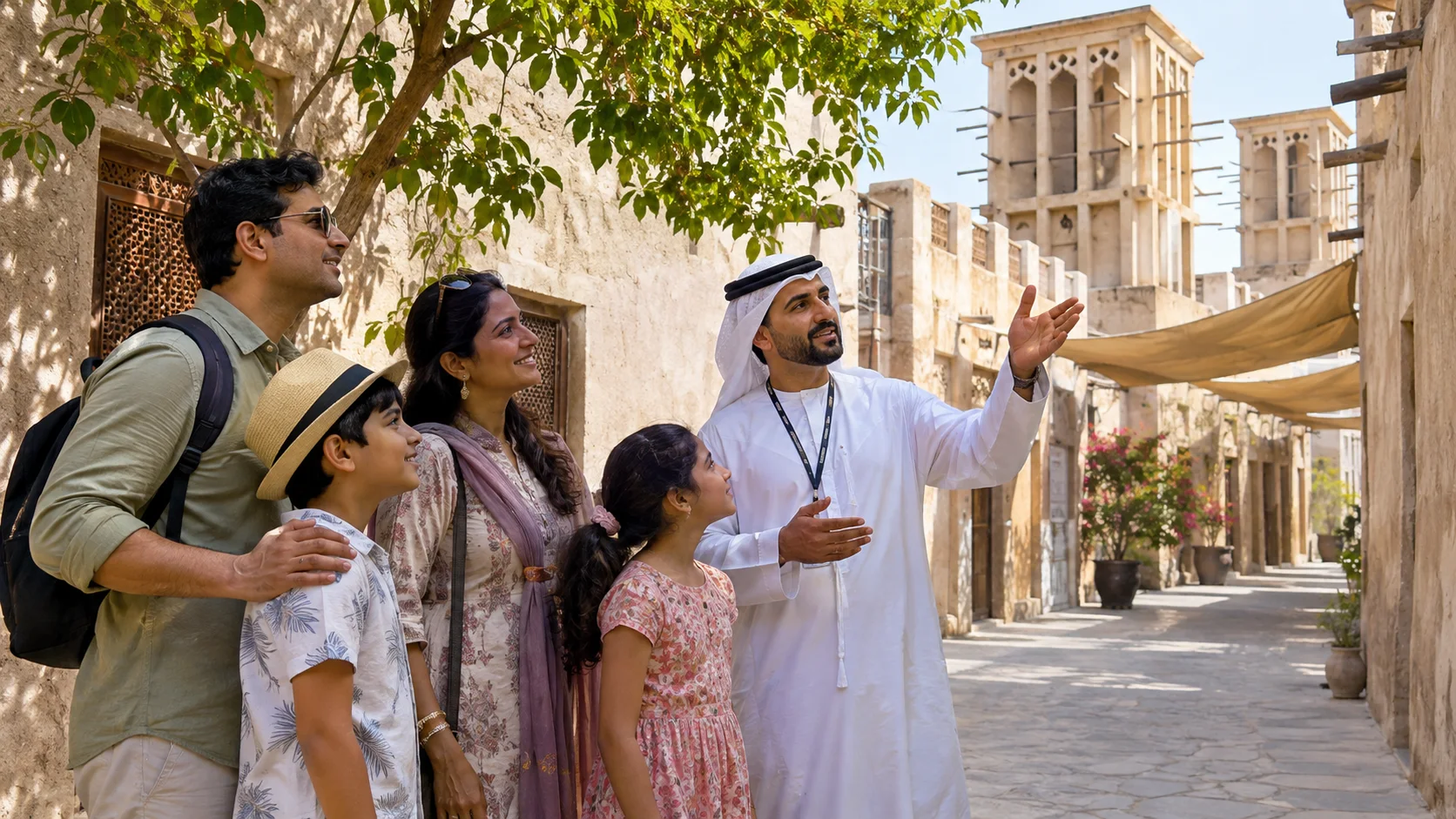
Dubai’s history is easiest to understand around the Creek, where trade, migration and traditional architecture explain how the modern city developed. A cultural package needs time for walking and conversation.
Core cultural day
| Time | Area | Focus |
|---|---|---|
| Morning | Al Fahidi | Architecture and museums |
| Midday | Creek | Abra crossing |
| Afternoon | Deira | Markets and trade |
| Evening | Traditional meal | Food and conversation |
Use a guide where context matters
A strong guide connects architecture, pearl trading, migration and customs rather than only naming buildings. Ask about group size, language and included admissions.
Cultural etiquette
- Dress respectfully for religious or cultural sites
- Ask before photographing people
- Follow entry and prayer-time rules
- Avoid interrupting private gatherings
- Listen before generalizing about local life
Balance old and new Dubai
Pair the Creek with Dubai Frame, Downtown or a contemporary museum to understand the scale and speed of the city’s transformation.
Allow walking time
Heritage lanes and souks are better experienced slowly. Schedule cooler hours, comfortable shoes and water rather than rushing between vehicle stops.
Add a guided heritage day to a broader city package. Explore Dubai tour packages or request a custom quote.
Frequently asked questions
How much time is needed for Old Dubai?
A full day allows Al Fahidi, an abra crossing, Deira markets and a meal without rushing.
Is a guide necessary?
Not essential, but a knowledgeable guide adds historical and cultural context that signs alone may not provide.
Is the heritage area suitable for families?
Yes, though families should plan for walking, heat and children’s attention spans.